
Helmke Drum Data Interpretation
 13.11.2026
What is Helmke Drum Testing?
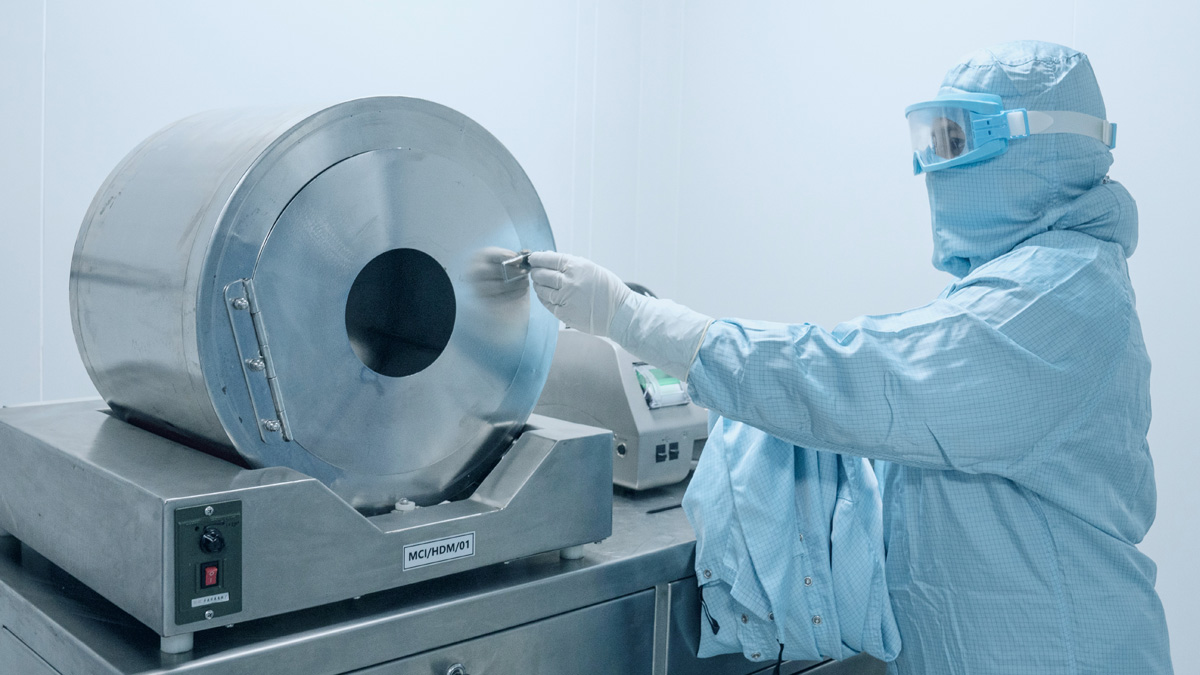
- A test to measure how many particles are released from a garment, or item, when it is moved.
- It follows the method described in the US standard IEST-RP-CC003.5.
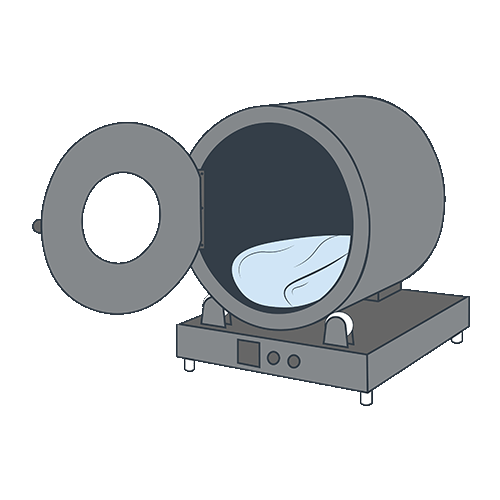
- The garment is placed inside a rotating drum and tumbled under dry, controlled conditions.
- A particle counter then measures the particulate in the drum air during the 10-minute tumbling and calculates an average per minute, which is used to determine the particle emission rate from the garment.
- The particle emission rate is representative of how many particles a garment releases when worn.
- Helmke drum measurements are not suitable for mops/wipes/gloves (these use a different test).
 |
 |
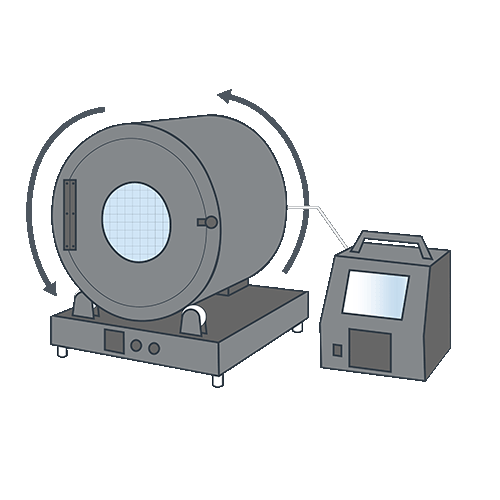 |
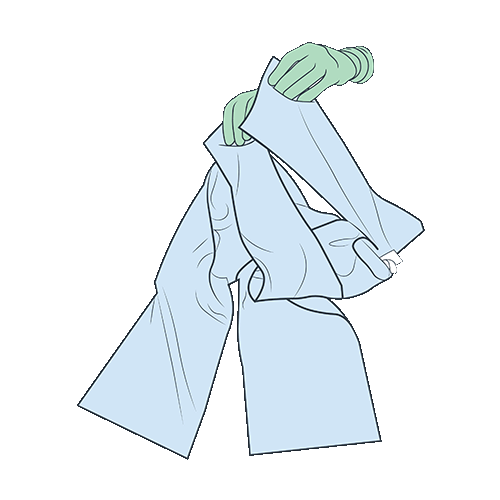
| Cleanroom garment is folded. | Cleanroom garment is placed in the test drum. | Particle sampling is conducted while the drum tumbles the garment. |
How are cleanliness classifications defined?
- The IEST standard for specific garment types defines limits for: frocks, coveralls and hoods.
- Limits are based on medium-sized garments.
- Based on the particulate levels, items will be assigned a ‘cleanliness category’.
What do the cleanliness categories mean in practical terms?
Cleanliness categories indicate the expected particle release under normal use:
- Category I: Very low particle shedding = suitable for critical cleanroom areas.
- Category II: Moderate particle shedding = suitable for less critical cleanrooms.
- Category III: Higher particle shedding = may be used in non-critical or peripheral areas.
Why does garment or item size matter?
- Larger items have more fabric which will release more particles.
- Smaller items naturally release fewer particles overall.
- Size must be considered to avoid misleading results.
How are results reported?
Method 1: Direct comparison to standard limits
- Reports the particles from a total item and compares directly to standard limits.
- Item size is not factored in.
- Small items can appear to perform better as they have less area to produce particles.
- This can give misleading results.
Method 2: Size-adjusted comparison (Micronclean’s preferred method)
- Results and standard limits are adjusted per square metre (m2) of material/item.
- Limits are adjusted based on the actual surface area of the item.
- All items are therefore directly compared to the same particle emission rate standard.
- Allows fair comparison between different sizes and item types and prevents small items from seeming to be suitable for a cleanroom just because they are small.
What should customers consider when comparing supplier data?
- Not all suppliers use the same reporting method.
- Always check how the category was determined.
- Results from different methods will not be comparable.
Key takeaways
- Helmke drum testing measures particle release under dry movement.
- Results must be interpreted with item size in mind.
- Size‑adjusted reporting provides the most meaningful comparison.
- Understanding the method used is essential when comparing data.
TKN03: Helmke Drum Data Interpretation by Tasmin Crompton - Technical Lead